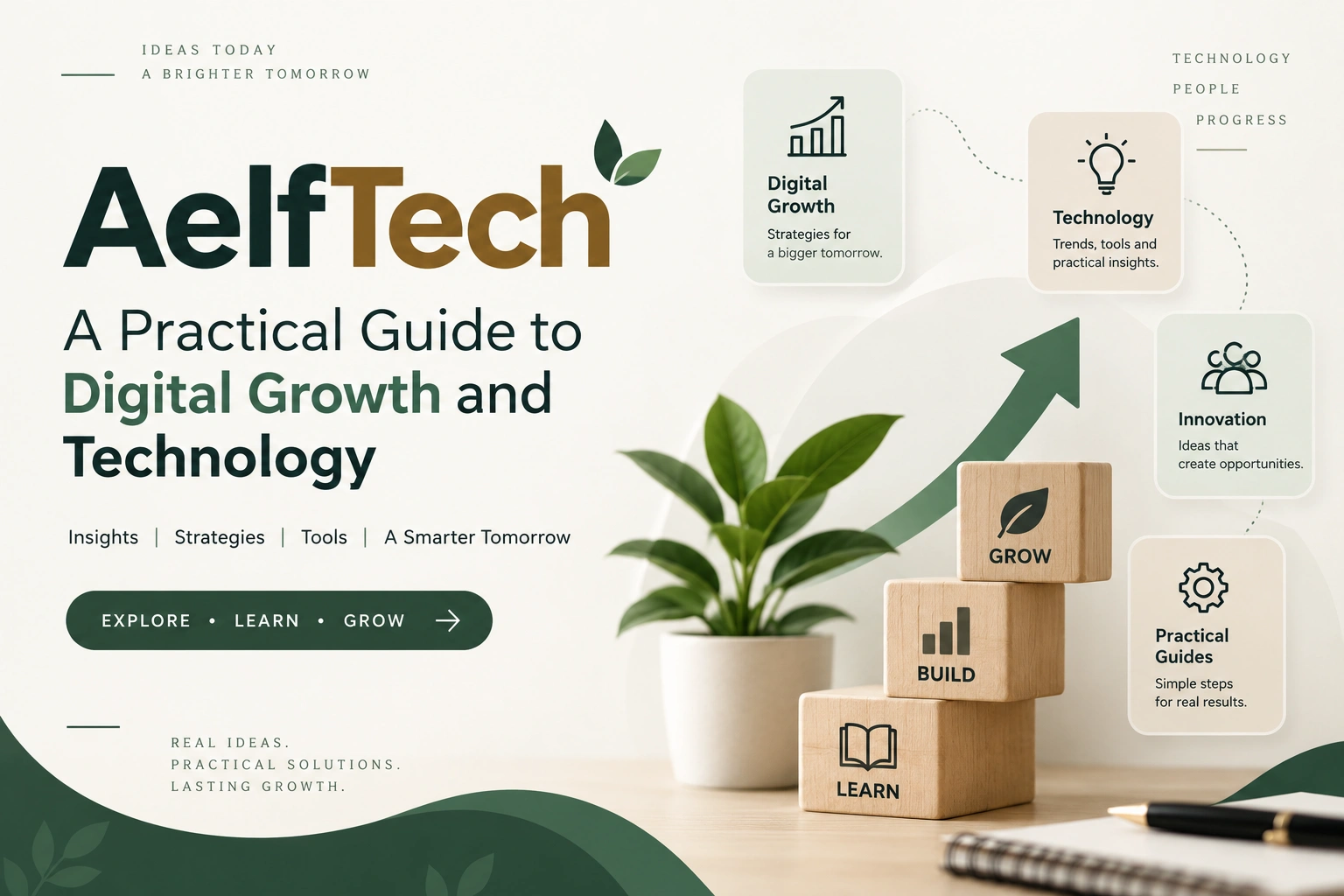
AelfTech: A Practical Guide to Digital Growth and Technology.
Introduction
Building a successful online presence involves much more than creating a website. Businesses need visibility, useful content, strong technical foundations, effective advertising, and a clear understanding of their target audience. AelfTech is positioned around these digital-growth needs, combining areas such as SEO, digital marketing, PPC, website development, social media, and technology solutions.
The platform’s public information presents AelfTech as a digital marketing and technology-focused business serving organizations that want to strengthen their online presence. Its wider content ecosystem also covers technology, engineering, digital marketing, AI, cloud and DevOps, cybersecurity, data analytics, and startups.
This guide explores AelfTech, the digital services associated with its public positioning, and the practical principles businesses can use when planning their own digital-growth strategy.
What Is AelfTech?
AelfTech is a digital marketing and technology-focused brand offering services and information related to online business growth.
Its public website highlights areas including:
- SEO
- PPC advertising
- Digital marketing
- Social media marketing
- Website development
- Website optimization
- Technology solutions
- Business growth strategies
The company describes its approach as focused on improving online visibility and creating measurable digital outcomes.
This places AelfTech within a broad digital-services category rather than limiting it to a single marketing discipline.
Why Businesses Need an Integrated Digital Strategy
A website cannot operate effectively in isolation.
A business might have an attractive website but receive little organic traffic. Another company may generate traffic through advertising but struggle to convert visitors into customers.
Digital growth often depends on how multiple areas work together.
Important Components Include
- SEO: Helps improve organic search visibility.
- PPC: Can provide paid visibility and targeted traffic.
- Web development: Creates the technical foundation for digital activity.
- Content: Helps answer customer questions and demonstrate expertise.
- Social media: Supports awareness and audience engagement.
- Analytics: Helps businesses understand what is working.
- Conversion optimization: Turns relevant visitors into leads or customers.
An integrated approach makes it easier to identify weaknesses between these different areas.
AelfTech and Search Engine Optimization
SEO is one of the major services associated with AelfTech’s public positioning. Its website highlights advanced SEO services and describes strategies involving search visibility and website optimization.
SEO is not simply about inserting keywords into pages.
A modern SEO strategy can involve several areas.
Technical SEO
Technical SEO focuses on making a website accessible and understandable to search engines.
Important areas can include:
- Crawlability
- Indexability
- Site architecture
- Internal linking
- Mobile usability
- Page performance
- Structured data
- HTTPS
- Canonicalization
A technically strong website gives search engines a better foundation for discovering and understanding its content.
On-Page SEO
On-page optimization focuses on the actual content and page elements.
This can include:
- Page titles
- Headings
- Meta descriptions
- Content structure
- Search intent
- Internal links
- Image descriptions
- Relevant terminology
The goal should be to help users find clear answers rather than simply repeating keywords.
Content-Focused SEO
Useful content is an important part of long-term search visibility.
A strong article should answer a genuine user question and provide enough context to be useful.
Instead of creating dozens of pages targeting minor keyword variations, businesses can build topical depth around important subjects their audiences actually search for.
AelfTech and PPC Advertising
AelfTech’s public services information also highlights PPC management.
Pay-per-click advertising can give businesses immediate opportunities to appear in paid search results or other advertising placements.
However, successful PPC is about more than launching advertisements.
A campaign normally requires attention to:
- Audience targeting
- Keyword or audience selection
- Ad messaging
- Landing pages
- Conversion tracking
- Budget allocation
- Performance analysis
- Ongoing optimization
SEO vs. PPC
| Factor | SEO | PPC |
|---|---|---|
| Traffic source | Organic | Paid |
| Initial visibility | Usually slower | Can be immediate |
| Direct media cost | No payment per organic click | Advertiser pays for clicks or other actions depending on campaign |
| Long-term value | Can compound over time | Depends on ongoing campaign investment |
| Optimization | Content and technical improvements | Targeting, ads, bids, landing pages |
| Best use | Sustainable organic visibility | Targeted paid acquisition |
The two approaches do not necessarily compete with each other. Many businesses can use both.
Website Development as a Growth Foundation
AelfTech also identifies WordPress development and website-related technical services among its offerings.
A website should do more than look professional.
It should also provide a smooth experience for visitors.
Important Website Considerations
- Clear navigation
- Mobile-friendly design
- Fast and reliable performance
- Secure connections
- Accessible content
- Strong calls to action
- Logical page structure
- Easy-to-use contact forms
- Appropriate analytics
A technically sound website can support both marketing and customer experience.
Why Website Performance Matters
Visitors generally expect websites to load and respond efficiently.
Performance can influence usability, especially for users on slower connections or mobile devices.
Businesses should regularly review:
- Page-loading performance
- Image sizes
- Unnecessary scripts
- Hosting configuration
- Caching
- Mobile performance
- Core Web Vitals
- Broken links
Performance optimization should be treated as an ongoing process rather than a one-time project.
AelfTech and Social Media Marketing
Social media is another area included in AelfTech’s public digital-service positioning.
Social media can support a company’s broader marketing strategy by helping it:
- Build awareness
- Share educational content
- Engage customers
- Distribute website content
- Demonstrate expertise
- Promote products or services
- Collect audience feedback
However, businesses should choose platforms based on where their target audience actually spends time.
Being present on every platform is not automatically better.
Digital Marketing Should Start With the Customer
One common mistake is starting a marketing strategy with channels instead of customer needs.
A better approach begins with questions such as:
Who is the customer?
What problem are they trying to solve?
What information do they need before buying?
Where do they search for answers?
What prevents them from taking action?
Once these questions are understood, businesses can choose appropriate marketing channels.
Building a Practical Digital Growth Funnel
A simple digital marketing funnel can be divided into several stages.
1. Awareness
Potential customers first discover the business.
Possible channels include:
- Search engines
- Social media
- Paid advertising
- Referrals
- Content
2. Consideration
The visitor evaluates whether the company can solve their problem.
Useful assets can include:
- Guides
- Product pages
- Service pages
- Reviews
- Case studies
- FAQs
3. Conversion
The visitor takes an intended action.
Examples include:
- Requesting a quote
- Booking a consultation
- Making a purchase
- Signing up
- Contacting the business
4. Retention
After conversion, businesses can focus on customer satisfaction and repeat engagement.
This might involve:
- Email communication
- Customer support
- Useful educational content
- Loyalty programs
- Product updates
AelfTech and Data-Driven Decision Making
Digital marketing generates data that can help businesses make better decisions.
Useful metrics vary by objective.
SEO Metrics
Businesses may monitor:
- Organic traffic
- Search visibility
- Search queries
- Indexed pages
- Organic conversions
PPC Metrics
Campaign analysis can include:
- Click-through rate
- Cost per click
- Conversion rate
- Cost per conversion
- Return on advertising spend
Website Metrics
Businesses may examine:
- Traffic sources
- Engagement
- Conversion rates
- Landing-page performance
- User journeys
The important point is to connect metrics to business objectives.
A large amount of traffic does not necessarily mean a successful campaign if the visitors are unlikely to become customers.
AI and the Changing Digital Landscape
Artificial intelligence is increasingly influencing digital marketing and technology.
AelfTech’s broader technology knowledge ecosystem currently includes AI & Machine Learning as one of its categories, alongside areas such as cloud and DevOps, cybersecurity, data analytics, and startups.
AI can support activities such as:
- Content research
- Data analysis
- Workflow automation
- Customer-service systems
- Software development
- Marketing analysis
- Information organization
But businesses should treat AI outputs carefully.
AI-generated information can contain errors, outdated claims, or missing context. Human review remains important, particularly for content involving sensitive or consequential information.
Cybersecurity Should Be Part of Digital Growth
Marketing and technology strategies should also consider security.
A business website can contain valuable information and may connect to:
- Customer databases
- Payment systems
- Email accounts
- Analytics platforms
- Advertising accounts
- Content management systems
Basic security practices include:
- Strong passwords
- Multi-factor authentication
- Regular software updates
- Secure hosting
- Reliable backups
- Limited administrative access
- Monitoring for suspicious activity
Security should be considered part of website maintenance rather than something addressed only after an incident.
Choosing the Right Digital Marketing Strategy
There is no single strategy that works equally well for every business.
A local service company may prioritize local SEO and lead generation. An online retailer may need a combination of SEO, paid advertising, content, email, and conversion optimization.
A B2B company may have a longer customer journey and therefore require educational content and lead nurturing.
A Practical Decision Framework
| Business Need | Potential Focus |
|---|---|
| Increase organic visibility | SEO |
| Generate immediate paid traffic | PPC |
| Improve website experience | Web development |
| Build brand awareness | Content + social media |
| Understand performance | Analytics |
| Automate repetitive tasks | Technology + AI |
| Protect digital assets | Cybersecurity |
The best strategy depends on the business model, audience, resources, and goals.
How to Evaluate a Digital Marketing Agency
Before hiring any agency or consultant, businesses should ask practical questions.
Ask About the Strategy
Can the provider explain what they plan to do and why?
Ask About Measurement
What metrics will be tracked?
Ask About Reporting
How frequently will performance be reported?
Ask About Responsibilities
Which activities will the agency manage and which remain with the client?
Ask About Expectations
Are the expected outcomes realistic?
Be cautious about promises of guaranteed search rankings or guaranteed business results. Marketing performance depends on many factors outside the control of any single provider.
Common Digital Marketing Mistakes to Avoid
Even businesses with good products can struggle with digital marketing because of avoidable mistakes.
Targeting Everyone
A broad audience can make messaging unclear.
Focusing Only on Traffic
Traffic is useful, but qualified traffic and conversions matter more for many businesses.
Ignoring Technical Problems
Poor site performance, broken links, indexing problems, or confusing navigation can undermine marketing efforts.
Publishing Without a Purpose
Every content piece should have a clear audience and objective.
Using Outdated Information
Digital marketing practices evolve. Businesses should regularly review strategies and tools.
Neglecting Security
Marketing accounts and websites can become targets for unauthorized access.
A Simple Digital Growth Plan for Small Businesses
Small businesses do not necessarily need dozens of tools or marketing channels.
A practical starting framework can look like this:
Step 1: Establish the Website
Create a clear, mobile-friendly website with essential business information.
Step 2: Define the Audience
Identify your ideal customer and the problems they want to solve.
Step 3: Build Search Visibility
Create useful pages around important services, products, and questions.
Step 4: Test Paid Acquisition
Use PPC where immediate visibility makes business sense.
Step 5: Strengthen Content
Publish genuinely useful resources rather than content created solely for search engines.
Step 6: Track Conversions
Determine which channels contribute to meaningful business actions.
Step 7: Improve Continuously
Use performance data to decide what should be changed, expanded, or removed.
AelfTech as a Digital Knowledge and Services Brand
AelfTech’s public web presence illustrates how the digital-services landscape increasingly overlaps with technology.
SEO is connected to websites.
Web development affects marketing performance.
AI influences workflows.
Cybersecurity affects trust.
Analytics informs decisions.
Digital marketing connects all of these areas to customer acquisition and business growth.
A broader understanding of these relationships can help businesses avoid treating each digital channel as a completely separate activity.
E-E-A-T and Trustworthy Digital Content
E-E-A-T stands for Experience, Expertise, Authoritativeness, and Trustworthiness.
These principles are particularly useful when evaluating digital marketing and technology information.
Experience
Practical experience can help distinguish theoretical advice from strategies that have actually been tested.
Expertise
Technical subjects such as SEO, cybersecurity, PPC, and web development require accurate explanations.
Authoritativeness
Important claims should be supported by credible sources where appropriate.
Trustworthiness
Businesses and readers should be able to understand what is known, what is uncertain, and what depends on individual circumstances.
For rapidly changing subjects such as AI and search, current information is especially important.
How AelfTech Fits Into Modern Digital Growth
AelfTech’s public positioning combines several areas that are closely connected in modern business:
- SEO for organic visibility
- PPC for paid acquisition
- Web development for digital infrastructure
- Social media for audience engagement
- Technology for efficiency and innovation
- Analytics for informed decision-making
The advantage of thinking about these areas together is that businesses can build a more consistent customer journey.
A visitor might discover a company through Google, read its content, visit the website, interact with a social profile, and eventually become a customer.
Each stage contributes to the overall experience.
Frequently Asked Questions
What is AelfTech?
AelfTech is a digital marketing and technology-focused brand associated with services such as SEO, PPC, website development, social media marketing, and digital growth. Its public website presents these services as part of an integrated approach to improving online business performance.
What services does AelfTech offer?
AelfTech’s publicly listed services include SEO, PPC management, social media marketing, WordPress development, website optimization, and related digital-growth services. The exact service offering can change, so businesses should check the current official website before making a purchasing decision.
Is AelfTech focused only on SEO?
No. SEO is an important part of its public positioning, but AelfTech also presents services involving PPC, social media, web development, and broader digital strategies.
Why is SEO important for a business?
SEO can help businesses improve their visibility in organic search results and attract people actively looking for relevant information, products, or services. Effective SEO generally combines technical optimization, useful content, search intent, website structure, and ongoing measurement.
How is PPC different from SEO?
PPC provides paid visibility through advertising, while SEO focuses on improving organic search visibility. PPC can generate visibility quickly when campaigns are active, while SEO can build longer-term organic visibility through ongoing optimization and useful content.
Can AI help with digital marketing?
Yes, AI can support areas such as research, content workflows, analytics, automation, and customer-service processes. However, AI outputs should be reviewed by people, particularly when accuracy, privacy, security, or business-critical decisions are involved.
Conclusion
AelfTech represents the intersection of digital marketing, technology, and online business growth. Its public service offering covers areas including SEO, PPC, website development, social media, and digital strategy, while its broader technology-focused content ecosystem also explores AI, cybersecurity, cloud, data, engineering, and startups.
For businesses, the bigger lesson is that digital growth rarely comes from one isolated tactic. A strong website, useful content, search visibility, paid acquisition, analytics, security, and a clear customer journey can work together to create a stronger digital presence.
Whether a business is just getting started or improving an established online operation, the most effective strategy begins with clear goals, a defined audience, measurable outcomes, and continuous improvement.