
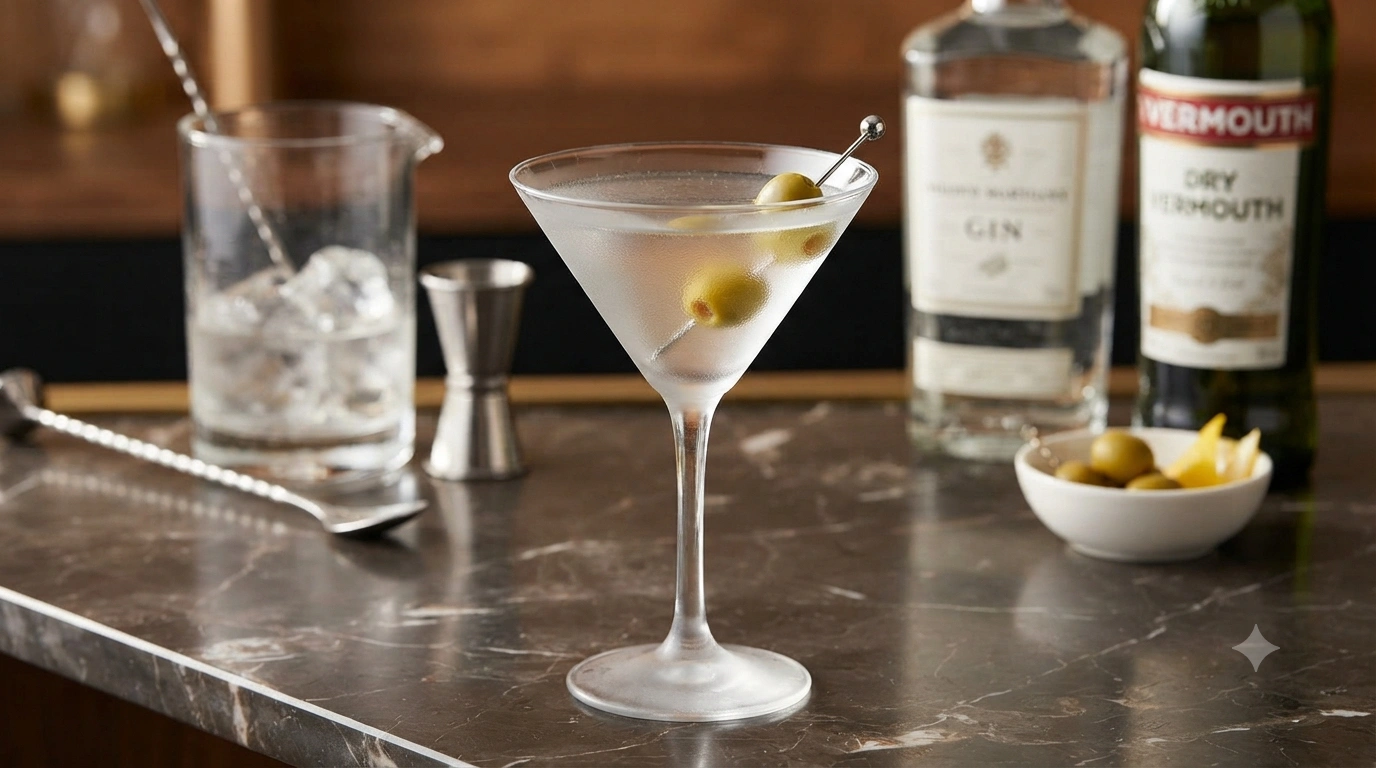
How to Make a Classic Martini at Home: Recipe, Ratios & Tips.
Introduction
A classic Martini recipe looks simple, but its simplicity is exactly what makes it interesting. There are only a few core ingredients, yet small changes in the gin, vermouth ratio, temperature, dilution, and garnish can noticeably change the final drink.
For a traditional Dry Martini, gin and dry vermouth are combined with ice and stirred until properly chilled. The mixture is then strained into a chilled cocktail glass and finished with either a lemon expression or an olive, depending on your preference.
The International Bartenders Association lists a Dry Martini with 60 ml of gin and 10 ml of dry vermouth. Other respected cocktail references use different proportions, often around five parts gin to one part vermouth. That flexibility is part of the Martini’s long history and explains why two bars can serve noticeably different versions of the same cocktail.
If you want to make a good Martini at home, the process does not need to be complicated. Quality ingredients, cold glassware, good ice, and controlled dilution will take you much further than a long list of ingredients.
Classic Martini Recipe at a Glance
| Detail | Recommendation |
|---|---|
| Drink | Classic Dry Martini |
| Base spirit | Gin |
| Vermouth | Dry vermouth |
| IBA ratio | 60 ml gin + 10 ml dry vermouth |
| Common modern ratio | Around 5:1 gin to vermouth |
| Technique | Stir |
| Ice | Plenty of fresh ice |
| Glass | Chilled Martini or cocktail glass |
| Garnish | Lemon peel or green olive |
| Serving style | Strained and served up |
The exact ratio can be adjusted according to how dry or vermouth-forward you prefer the drink.
Ingredients for a Classic Martini
A Martini does not require a complicated shopping list. The traditional formula revolves around a few ingredients.
Gin
Gin provides the main flavor and structure.
A London Dry-style gin is a common choice because its juniper and botanical character works naturally with dry vermouth. You can also experiment with contemporary gins that emphasize citrus, herbs, flowers, or other botanicals.
Since gin makes up most of the cocktail, its character will be noticeable. Choosing a bottle you already enjoy drinking is a sensible starting point.
Dry Vermouth
Dry vermouth provides herbal, botanical, and slightly bitter notes while softening the intensity of the gin.
The amount you use has a major effect on the finished drink. Less vermouth produces a drier, more spirit-forward Martini. Increasing the vermouth creates a softer and more aromatic cocktail.
Once opened, vermouth should be treated differently from distilled spirits because it is a fortified wine. Refrigerating an opened bottle helps preserve its quality.
Ice
Ice is not merely there to make the drink cold.
During stirring, some of the ice melts and adds controlled dilution. That water becomes part of the finished cocktail and helps balance the strong alcoholic ingredients.
Large, solid pieces of fresh ice are useful because they chill the drink efficiently while avoiding unnecessary melting.
Garnish
Two classic choices are a lemon peel and a green olive.
A lemon peel contributes aromatic citrus oils. Expressing the peel over the surface of the drink can add a noticeable fragrance.
An olive creates a more savory presentation and flavor.
There is no universal requirement that one garnish must always be used. Personal preference plays an important role.
How to Make a Classic Martini
Step 1: Chill the Glass
Place your Martini or cocktail glass in the refrigerator or freezer for a few minutes before mixing.
A cold serving glass helps the cocktail stay chilled after straining.
If you do not have enough freezer space, fill the glass with ice and cold water while preparing the drink. Empty it immediately before pouring.
Step 2: Add Gin and Vermouth
Pour the gin and dry vermouth into a mixing glass.
For the IBA-style formula, use:
- 60 ml gin
- 10 ml dry vermouth
Another practical starting point is a 5:1 ratio, such as 50 ml gin with 10 ml vermouth.
The right proportion depends on your preferred style. A larger vermouth component will make the cocktail more aromatic and less aggressively spirit-forward.
Step 3: Add Plenty of Ice
Fill the mixing glass with fresh ice.
Good dilution is one of the secrets to a balanced Martini. Too little stirring can leave the drink overly hot and alcoholic, while excessive dilution can make it thin.
Step 4: Stir Until Well Chilled
Stir the cocktail smoothly with a bar spoon.
A common reference point is approximately 20–30 seconds of stirring, although the exact time depends on the ice, mixing glass, quantity, and temperature.
The goal is not simply to move the ingredients around. Stirring chills the drink and introduces controlled dilution.
Step 5: Strain
Strain the chilled mixture into your prepared cocktail glass.
A properly stirred Martini should appear clear rather than cloudy or filled with visible ice fragments.
Step 6: Add Your Garnish
Finish with your preferred garnish.
For a citrus version, hold a strip of lemon peel over the surface and express its oils across the drink. You can then discard the peel or use it as the garnish.
An alternative is a green olive.
What Makes a Martini “Dry”?
The word dry can cause confusion.
In Martini terminology, “dry” generally refers to using a relatively small amount of vermouth compared with the base spirit. It does not mean that the Martini contains no vermouth.
Liquor.com describes a common Dry Martini ratio as approximately five parts gin to one part vermouth, although Martini proportions have changed over time and remain flexible.
Therefore, ordering or making a “dry” Martini does not necessarily mean eliminating vermouth altogether.
That small amount still contributes aroma, flavor, and balance.
What Is the IBA Martini Recipe?
The International Bartenders Association lists a Dry Martini containing:
- 60 ml gin
- 10 ml dry vermouth
The ingredients are placed in a mixing glass with ice and stirred before being strained into a chilled Martini cocktail glass. The IBA suggests expressing lemon oil over the drink or using a green olive as the garnish.
This gives home bartenders a straightforward reference recipe.
At the same time, the Martini has never been restricted to one universally accepted formula. Ratios vary between recipes, bars, bartenders, and drinkers.
Why Is a Martini Usually Stirred?
The classic Martini contains spirits and fortified wine rather than fruit juice, cream, or other ingredients that normally require vigorous aeration.
Stirring provides three important things:
- Chilling
- Dilution
- A clear appearance
Liquor.com recommends stirring a Dry Martini for roughly 20–30 seconds and notes that shaking can introduce tiny ice fragments and make the drink less clear.
That said, the famous “shaken, not stirred” instruction associated with James Bond has made the technique part of popular culture.
For a traditional clear Martini, stirring remains the standard technique used in many cocktail recipes.
Choosing the Right Gin
Gin is the dominant ingredient, so the style you select matters.
London Dry Gin
This is an easy place to start.
Its recognizable juniper-led profile works naturally in a traditional Martini.
Citrus-Forward Gin
A citrus-focused gin can make the cocktail feel brighter and work particularly well with a lemon garnish.
Floral Gin
Floral botanicals can produce a softer aromatic character.
This style can be interesting if you prefer a Martini with more noticeable perfume and less emphasis on sharp juniper.
Contemporary Botanical Gin
Modern gins can contain a wide range of botanical combinations.
Experimenting with different bottles is one of the easiest ways to discover how much the base spirit influences a Martini.
Choosing Dry Vermouth
Dry vermouth is not just a supporting ingredient.
Different vermouths can introduce herbal, floral, bitter, citrus, or spice-like characteristics. A change in vermouth can therefore transform the cocktail even when the gin remains exactly the same.
For a first Martini, choose a fresh bottle from a reputable producer and keep it refrigerated after opening.
That last point is easy to overlook.
Because vermouth is a fortified wine rather than a fully distilled spirit, its flavor can deteriorate after opening if it is stored poorly or left for too long.
The 5:1 Martini Ratio
A 5:1 ratio is a useful starting point for a Dry Martini.
For example:
- 50 ml gin
- 10 ml dry vermouth
This creates a spirit-forward drink while still giving vermouth a meaningful role.
The exact measurement does not have to become a rigid rule.
Someone who enjoys a softer Martini might increase the vermouth. A drinker who prefers a particularly spirit-forward style might decrease it.
Liquor.com’s current Dry Martini reference uses 2½ ounces of gin and ½ ounce of dry vermouth, which is also a 5:1 ratio.
What Is a 50/50 Martini?
The 50/50 Martini takes the opposite approach.
Instead of emphasizing gin, it uses equal parts gin and dry vermouth.
A representative recipe uses:
- 1½ ounces gin
- 1½ ounces dry vermouth
- 1 dash orange bitters
- Lemon twist
The result is less spirit-heavy and gives vermouth much more influence over the flavor.
This version can be a useful choice for someone who finds a traditional Dry Martini too intense.
Easy Martini Variations
Once you understand the basic formula, several classic variations become easy to recognize.
Vodka Martini
Replace gin with vodka.
Vodka creates a comparatively neutral base, allowing the vermouth and garnish to play a more prominent role.
A common version combines vodka with dry vermouth and may include orange bitters. Lemon peel or an olive can finish the drink.
Dirty Martini
A Dirty Martini adds olive brine to the basic gin-or-vodka-and-vermouth structure.
One common recipe uses:
- 2½ ounces gin or vodka
- ½ ounce dry vermouth
- ½ ounce olive brine
- Three olives
The brine introduces a salty, savory quality.
You can adjust the amount of brine according to taste.
Gibson
The Gibson uses gin or vodka with dry vermouth and is distinguished by its cocktail-onion garnish.
That small change creates a noticeably different aromatic and savory impression.
Reverse Martini
A Reverse Martini changes the traditional balance by giving vermouth a larger role than the base spirit.
This approach is useful for people who want to explore vermouth rather than simply use it as a small modifier.
50/50 Martini
Equal parts gin and dry vermouth create a softer, more vermouth-forward drink.
Orange bitters and a lemon twist can add additional structure and aroma.
Lemon Twist or Olive?
The garnish changes more than the appearance.
Choose Lemon When:
- you enjoy citrus aromas;
- your gin has bright botanical notes;
- you prefer a fresh finish;
- you want the Martini to smell more aromatic.
Expressing the lemon peel over the drink releases its oils onto the surface.
Choose an Olive When:
- you prefer savory flavors;
- you like briny notes;
- you are making a Dirty Martini;
- you enjoy a more traditional bar-style presentation.
Neither option is inherently the only correct choice.
Common Martini-Making Mistakes
Using Too Much Vermouth
If you want a Dry Martini, adding a large amount of vermouth can move the drink toward a wetter style.
That is not necessarily bad, but it changes the character of the cocktail.
Using Warm Glassware
A warm serving glass can quickly raise the temperature of a small cocktail.
Chilling the glass beforehand is a simple improvement.
Stirring With Poor Ice
Wet, partially melted ice can add more water than intended.
Fresh, solid ice makes dilution easier to control.
Overlooking Vermouth Storage
Leaving opened vermouth at room temperature for extended periods can affect its quality.
Refrigeration is a simple habit that helps preserve the bottle.
Pouring Without Dilution
A Martini made from straight gin and vermouth without sufficient stirring can taste harsh and overly alcoholic.
The small amount of water introduced through melting ice is part of the finished drink.
Using an Oversized Glass
A large glass can make the cocktail warm more quickly.
A smaller chilled cocktail glass can help preserve temperature and keep the serving more manageable.
How Cold Should a Martini Be?
A Martini should be served very cold.
The combination of chilled glassware, plenty of ice, and sufficient stirring helps achieve that result.
Temperature is particularly important because the drink contains a high proportion of spirits. Without enough chilling and dilution, the alcohol can dominate the palate.
A properly prepared Martini should feel cold, balanced, and smooth rather than simply hot and strong.
Martini Recipe for Beginners
If you are making your first Martini, try this straightforward formula:
Ingredients
- 50 ml gin
- 10 ml dry vermouth
- Fresh ice
- Lemon peel or green olive
Method
- Chill your cocktail glass.
- Add gin and dry vermouth to a mixing glass.
- Fill the mixing glass with fresh ice.
- Stir until thoroughly chilled.
- Strain into the chilled glass.
- Express a lemon peel over the drink or add an olive.
- Serve immediately.
This recipe follows the familiar spirit-forward structure while keeping the measurements easy to remember.
Can You Make a Martini Without a Mixing Glass?
Yes.
A proper mixing glass is convenient, but it is not essential for a home setup.
A sturdy pint glass or another suitable mixing vessel can work if it is clean and large enough to accommodate the liquid and ice.
Use a bar spoon or another long-handled spoon to stir.
Strain the finished drink through a cocktail strainer if you have one. In a pinch, careful pouring can work, but a proper strainer gives you better control.
Martini History: Why Are There So Many Versions?
The Martini has a long and somewhat uncertain history.
Its exact origin is disputed, and early recipes differed significantly from the Dry Martini most people recognize today.
Liquor.com notes that nineteenth-century cocktail books included sweet vermouth, while the Dry Martini developed toward a combination of dry gin and dry vermouth around the beginning of the twentieth century.
That history helps explain the drink’s flexibility.
The Martini has evolved through changing tastes, ingredients, bartending techniques, and cultural influences. Rather than having one permanently fixed formula, it has developed into a family of related styles.
Frequently Asked Questions
What is the easiest Martini recipe?
A simple starting point is 50 ml gin, 10 ml dry vermouth, plenty of ice, and either a lemon twist or olive. Stir until chilled and strain into a chilled cocktail glass.
What is the traditional Martini ratio?
There is no single ratio accepted for every Martini. A 5:1 gin-to-vermouth ratio is a common Dry Martini reference, while the IBA recipe uses 60 ml gin and 10 ml dry vermouth.
Should a Martini be shaken or stirred?
A classic spirit-forward Martini is traditionally stirred. Stirring chills and dilutes the drink while helping preserve a clear appearance.
What does “dry” mean in a Martini?
“Dry” generally means that the cocktail contains a relatively small proportion of dry vermouth compared with the base spirit.
Can I use vodka instead of gin?
Yes. A Vodka Martini replaces gin with vodka while retaining dry vermouth and optional bitters or garnish.
Is a Dirty Martini the same as a regular Martini?
No. A Dirty Martini adds olive brine, giving the drink a salty and savory character.
What garnish goes with a Martini?
Lemon peel and green olives are classic choices. A cocktail onion is used for a Gibson.
Does vermouth need to be refrigerated?
Yes, refrigeration is a sensible way to preserve an opened bottle of vermouth because it is a fortified wine rather than a fully distilled spirit.
Can beginners make a Martini at home?
Absolutely. The basic recipe requires only gin, dry vermouth, ice, and a garnish. The main skills are measuring accurately, chilling the drink, stirring properly, and controlling dilution.
Final Thoughts
A great Martini recipe does not require a complicated technique or an enormous ingredient list.
The foundation is simple: good gin, quality dry vermouth, plenty of fresh ice, proper chilling, controlled dilution, and a garnish you enjoy.
Start with a 5:1 ratio if you want a familiar Dry Martini style, or use the IBA’s 60 ml gin and 10 ml dry vermouth specification as a classic reference.
From there, adjust the vermouth according to your taste. More vermouth produces a softer, more aromatic drink, while less vermouth pushes the cocktail toward a drier, more spirit-forward profile.
Once the basic recipe feels comfortable, experimenting becomes easy. A 50/50 Martini, Vodka Martini, Dirty Martini, or Gibson can each show you a different side of the same classic cocktail family.