SnapJotz: A Fresh Look at Digital Stories, Ideas and Online Content.
Introduction
The way people discover information online has changed dramatically. Instead of visiting only traditional newspapers or specialist websites, readers now explore blogs, digital magazines, social platforms, content hubs, and independent publishing websites for quick answers and interesting stories.
SnapJotz fits into this wider digital-content environment. Its name suggests a platform centered around short, accessible pieces of online information, ideas, stories, and topics that can attract readers with different interests.
For modern internet users, platforms built around easily accessible content can be useful for discovering new subjects. A reader might arrive looking for one particular topic and then find related articles, ideas, or trends worth exploring.
But what makes a digital content platform useful? How should readers approach websites such as SnapJotz, and what should they look for when evaluating online information?
Let’s take a closer look.
What Is SnapJotz?
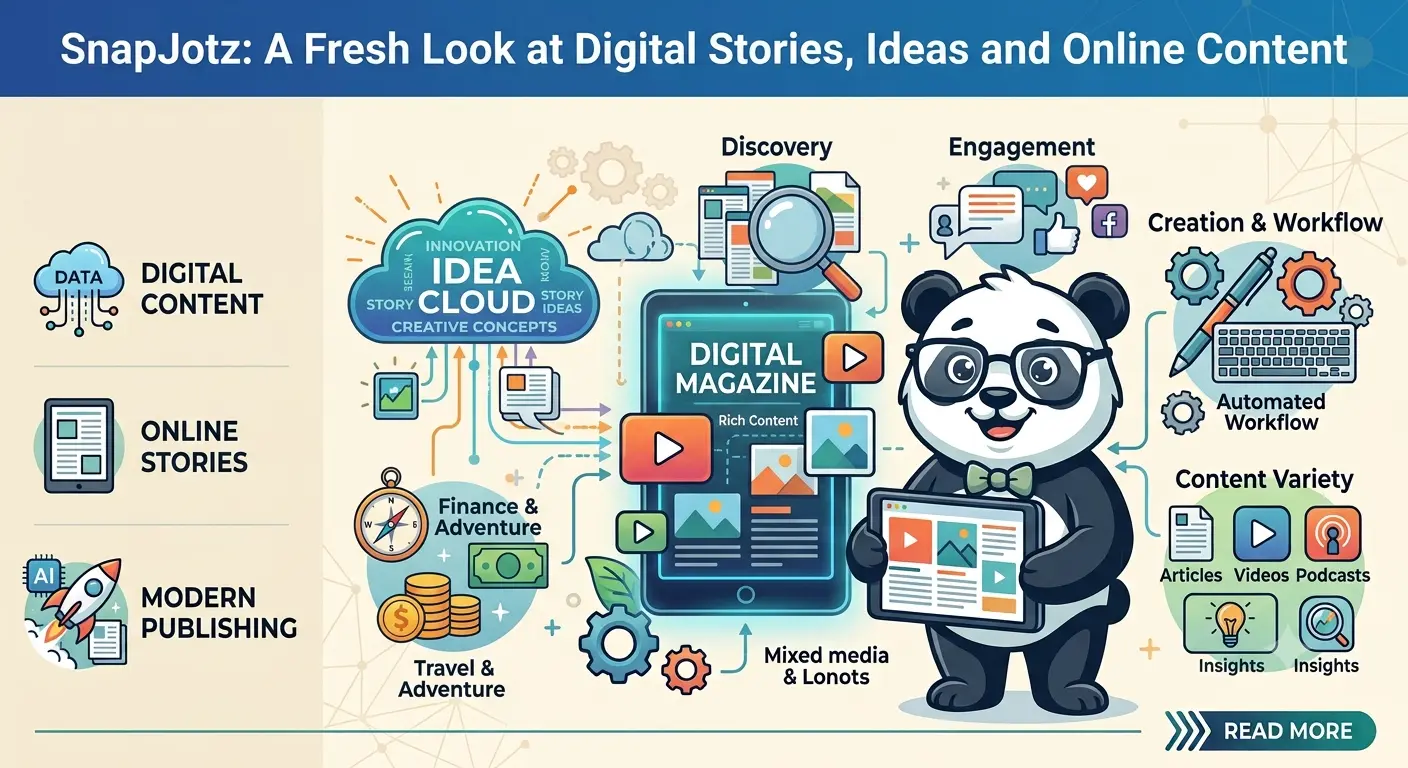
SnapJotz can be understood as a digital-content concept built around easily consumable online articles, stories, ideas, and information.
The name itself combines the idea of a quick “snap” with a “jot”—something brief, written, or recorded.
That makes it a natural fit for the modern web, where readers often prefer content that is:
- Easy to scan
- Clearly organized
- Mobile-friendly
- Direct
- Informative
- Accessible
Rather than requiring readers to spend a long time navigating complicated material, digital content platforms can make information easier to discover and consume.
Why Short-Form Digital Content Is Popular
Internet users have more information available to them than ever before.
At the same time, people often have limited time to read.
This has created strong demand for content that gets to the point while still providing useful information.
Quick Discovery
Readers can find information about a new topic within minutes.
Easy Reading
Short paragraphs and clear headings make online articles easier to scan.
Mobile Access
Digital content can be consumed on smartphones, tablets, and computers.
Shareability
Interesting articles can be shared through messaging apps and social networks.
Topic Variety
Readers can move from one subject to another without needing a separate publication for every interest.
What Kind of Content Can Readers Explore?
A broad digital platform such as SnapJotz can appeal to readers interested in a variety of subjects.
Potential content areas can include:
Lifestyle
Lifestyle content can cover everyday habits, organization, entertainment, hobbies, personal interests, and practical ideas.
Technology
Technology articles can explain digital tools, applications, artificial intelligence, gadgets, software, and emerging trends.
Business
Business content can introduce readers to entrepreneurship, marketing, workplace developments, productivity, and online businesses.
Entertainment
Entertainment articles can focus on popular culture, digital trends, movies, television, music, and internet conversations.
Travel
Travel content can provide destination ideas, planning suggestions, attractions, and general travel inspiration.
General Interest
Some of the most popular online content simply answers questions people search for every day.
SnapJotz and the Modern Reading Experience
Traditional magazines generally organize content into fixed editions.
Digital platforms work differently.
New content can appear continuously, and readers can discover articles through search engines, social media, recommendations, or direct links.
This creates a different kind of reading experience.
A visitor may start with one article and then follow related topics.
For example:
Technology → AI → Productivity → Digital Tools
Or:
Travel → Destination Guide → Food → Local Experiences
This type of content discovery encourages readers to explore subjects they may not have originally planned to research.
Why Clear Article Structure Matters
A well-structured article is easier for both readers and search engines to understand.
Useful elements include:
- A descriptive title
- A short introduction
- Clear H2 and H3 headings
- Short paragraphs
- Bullet points
- Tables where appropriate
- Frequently asked questions
- A concise conclusion
Readers often scan an article before deciding whether to read the entire piece.
Strong structure therefore isn’t just an SEO technique—it improves usability.
SnapJotz and Search Engine Discovery
Most people don’t begin their online research by typing the name of a website.
Instead, they search for questions.
For example:
- “How can I organize my workday?”
- “What are the latest AI tools?”
- “How do I plan a weekend trip?”
- “What are some interesting online trends?”
- “How can I improve productivity?”
Search engines then identify pages that appear relevant to those queries.
This is where search engine optimization becomes important for digital publishers.
How SEO Helps Digital Content
Search engine optimization helps search engines understand what a page is about.
Important SEO elements include:
Search Intent
The article should match what the reader is actually looking for.
Keywords
Relevant phrases should appear naturally throughout the content.
Headings
Headings help organize information around important subtopics.
Internal Links
Related articles can help readers continue exploring a website.
Useful Answers
Content should provide genuine value rather than simply repeating keywords.
Technical Quality
Pages should load properly and work well on mobile devices.
The goal should always be to create content that satisfies the reader rather than content designed only for search algorithms.
What Makes Digital Content Valuable?
A large content library is not necessarily a useful one.
Quality matters.
A valuable online article should ideally be:
Relevant: It addresses the reader’s question.
Accurate: Important facts are checked.
Readable: The writing is easy to understand.
Current: Time-sensitive information is updated.
Original: It provides genuine value rather than unnecessary repetition.
Well organized: Readers can quickly find the information they need.
How to Evaluate Information on SnapJotz
Whenever you read an online article, it’s worth developing the habit of evaluating the information rather than automatically accepting every statement.
Check the Publication Date
Some topics change quickly.
Technology, finance, travel rules, software, and online services can become outdated.
Look for the Author
Author information can provide useful context about who created the article.
Examine Sources
Important factual claims should ideally have credible supporting sources.
Compare Information
For important subjects, compare information with authoritative sources.
Distinguish Facts From Opinions
A commentary article should not be treated in exactly the same way as a factual reference guide.
When Should You Use Official Sources?
Blogs and digital content platforms can be excellent for learning about a topic.
However, certain subjects require additional verification.
These include:
- Medical information
- Legal requirements
- Financial decisions
- Investment information
- Government policies
- Immigration rules
- Travel documentation
- Safety instructions
For these subjects, use online articles as a starting point and confirm important details with official or professional sources.
SnapJotz and Content Discovery
One advantage of a broad digital platform is that it can introduce readers to subjects they hadn’t considered before.
Someone searching for a simple productivity tip might discover an article about:
- Time management
- Digital organization
- AI tools
- Work habits
- Personal development
Similarly, someone researching travel could discover content about:
- Local food
- Cultural experiences
- Budget planning
- Photography
- Travel technology
This makes digital content more than just an answer to a single question. It can become a starting point for further exploration.
Who Can Benefit From Digital Platforms Like SnapJotz?
Students
Students can use general-interest articles to build background knowledge before researching a subject more deeply.
Professionals
Professionals can discover information outside their normal area of expertise.
Entrepreneurs
Business and technology content can provide ideas and general knowledge.
Content Creators
Writers can discover emerging topics and different approaches to presenting information.
Casual Readers
People who simply enjoy discovering interesting stories can explore a variety of subjects.
SnapJotz and Mobile Reading
Smartphones have become one of the primary ways people access online content.
This makes mobile-friendly publishing increasingly important.
A good mobile reading experience should have:
- Readable text
- Clear headings
- Comfortable spacing
- Fast-loading pages
- Simple navigation
- Responsive images
- Minimal distractions
Readers should be able to understand the main purpose of an article quickly, even when accessing it from a small screen.
Digital Content vs. Traditional Magazines
Digital publishing and traditional magazines share a common purpose: providing readers with useful and interesting content.
But their formats are different.
| Feature | Digital Content | Traditional Magazine |
|---|---|---|
| Access | Online | Printed |
| Updates | Can be frequent | Usually fixed edition |
| Search | Easy | Limited |
| Sharing | Instant | Physical |
| Multimedia | Possible | Mostly static |
| Global reach | Potentially worldwide | Distribution dependent |
| Mobile access | Yes | No |
Digital publishing therefore offers a level of flexibility that traditional print cannot easily match.
The Importance of Responsible Online Publishing
As more people depend on the internet for information, publishers have an increasing responsibility to produce reliable content.
Good digital publishing should prioritize:
- Accuracy
- Transparency
- Originality
- Reader usefulness
- Appropriate sourcing
- Clear authorship
- Responsible updates
This is particularly important for articles dealing with subjects that could influence real-world decisions.
How to Get More Value From SnapJotz
If you’re exploring SnapJotz or similar digital content platforms, a few simple habits can improve your reading experience.
1. Start With a Clear Question
Know what you’re trying to learn.
2. Read the Introduction
It should quickly tell you what the article covers.
3. Scan the Headings
Headings help you find the sections most relevant to you.
4. Check the Date
Make sure information is current enough for your purpose.
5. Follow Supporting Sources
When an article references research or official information, consider checking the original source.
6. Compare Important Information
For high-stakes subjects, don’t rely on a single website.
The Future of Digital Content
Online publishing continues to evolve.
Readers now discover information through:
- Search engines
- Social media
- Video platforms
- News aggregators
- Podcasts
- Email newsletters
- AI-powered search
- Online communities
This means digital publishers need to think beyond simply publishing articles.
Successful content needs to be useful across multiple discovery channels while still providing a strong experience on the original website.
The future of digital publishing is likely to focus increasingly on:
- Personalization
- AI-assisted discovery
- Short-form content
- Interactive articles
- Multimedia storytelling
- Mobile-first experiences
- Trust and transparency
Frequently Asked Questions
What is SnapJotz?
SnapJotz is a digital-content concept centered around easily accessible online stories, ideas, information, and articles. The name reflects the modern preference for quick and convenient online content.
What type of content can be found on SnapJotz?
A broad digital content platform can cover subjects such as lifestyle, technology, business, entertainment, travel, productivity, and general-interest topics.
Is SnapJotz useful for discovering new topics?
Digital platforms with varied content can be useful for topic discovery because readers can move between related subjects and explore areas they may not have originally searched for.
Should online articles always be trusted?
No. Readers should evaluate the author, publication date, sources, and evidence. Important information should be independently verified through authoritative sources.
Is digital content better than printed magazines?
Neither format is automatically better. Digital content offers instant access, searchability, frequent updates, and multimedia, while printed magazines can provide a focused, distraction-free reading experience.
Why is SEO important for digital publishers?
SEO helps search engines understand content and connect relevant articles with people searching for specific information. Good SEO should support useful, well-written content rather than replace it.
Conclusion
SnapJotz represents the broader shift toward fast, accessible, and diverse digital content. Modern readers increasingly want information that is easy to discover, simple to understand, and convenient to access across different devices.
A digital platform built around stories, ideas, trends, and useful information can serve many types of readers—from students and professionals to entrepreneurs, creators, and casual internet users.
The most important factor, however, is content quality. Readers should look for clear writing, useful information, current details, credible sources, and transparent authorship.
As digital publishing continues to evolve, platforms such as SnapJotz operate within an increasingly competitive online environment where helpfulness, readability, originality, and trust matter more than simply publishing a large number of articles.
Whether you’re searching for an answer, discovering a new subject, or simply looking for something interesting to read, digital content platforms can provide a convenient starting point for exploring the enormous amount of information available online.